8 AWS Guides for Agentic AI — Mapped to the 4 Pillars That Get You to Production
 written by Stefan Christoph
The Gap Between Demo and Deployment
46% of AI proof-of-concept projects never make it to production [1]. The statistic doesn’t say why, but in the projects I see, it’s rarely because the technology doesn’t work. It does, on your laptop, with your data, for one user. The gap is everything else: operating at scale, grounding agents in real data, building trust, and proving reliability.
On Wednesday, I’m presenting “From Demo to Deployment: Solving Agentic AI’s Toughest Challenges” at AWS Summit Hamburg (session AIM201). I wrote about the talk and the full AI track in an earlier post. Here are the details:
- When: Wednesday, May 20, 2026 at 09:00 AM
- Where: Hamburg Messe, Breakout 9 (GenAI stage)
- Duration: 40 minutes
- Level: 200 – Intermediate
- Registration: Free, aws.amazon.com/de/events/summits/hamburg/
The talk frames the POC-to-production gap as four pillars that separate demos from deployments:
- ⚙️ Operational Excellence, Can you run it at scale?
- 🗄️ Data & Context, Does your agent have the right information?
- 🛡️ Trust, Can users trust their data to the agent?
- ✅ Reliability, Does it behave consistently?
In May 2026, AWS released a series of 8 prescriptive guidance documents, the Agentic AI content series [2], that cover exactly these challenges. This post maps each guide to the pillars, so you know which to read first depending on where you’re stuck.
The Guides at a Glance
| # | Guide | Primary Pillar | When to Read |
|---|---|---|---|
| 1 | Agentic AI Patterns and Workflows | All | You’re designing your first agent system |
| 2 | Foundations of Agentic AI | Conceptual | You need to explain agents to leadership |
| 3 | Writing Best Practices for RAG | Data & Context | Your agent retrieves wrong documents |
| 4 | Frameworks, Protocols, and Tools | Build Decision | You’re choosing between frameworks |
| 5 | Multi-Tenant Architectures | Trust + OpEx | You’re scaling to multiple users |
| 6 | RAG for Healthcare | Data & Context | You’re in a regulated vertical |
| 7 | Choosing a Vector Database | Data & Context | You’re evaluating storage options |
| 8 | Serverless Architectures | OpEx + Reliability | You want minimal server management |
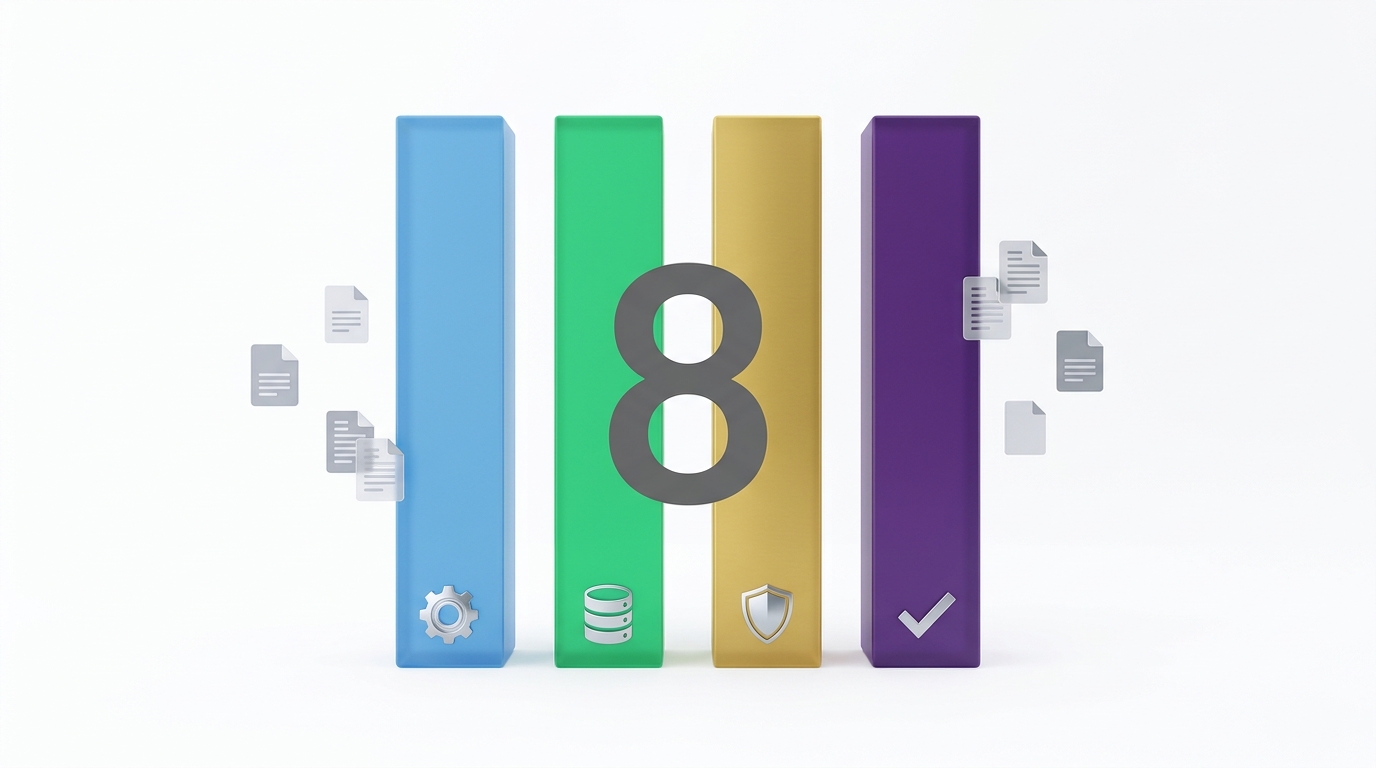
How the 8 guides distribute across the four pillars of production-ready agentic AI.
⚙️ Pillar 1: Operational Excellence
Can you operate this in production at the scale you need?
You can’t fix what you can’t see. In production, you need observability across LLMs, agents, knowledge bases, and tools. You need to control costs, because “it works” and “we can afford it at 10,000 users” are different statements. And you need to handle scale without re-architecting. (Note: the series doesn’t include a standalone cost optimization guide yet. Cost appears via the Serverless guide’s pay-per-use billing model, a billing shape that can cut or raise your bill depending on utilization, not an optimization strategy in itself, and the inference tier options covered in the talk.)
Start here:
Building Serverless Architectures for Agentic AI, This guide makes the business case for serverless AI: automatic scaling, on-demand execution, reduced operational overhead, pay-per-use. If you want to deploy agents without managing servers, IAM, configuration, quotas, observability, and cost governance stay with you, this is your blueprint. It covers AWS Lambda, Step Functions, EventBridge, and how they compose with Bedrock and AgentCore.
Building Multi-Tenant Architectures for Agentic AI, Once you move past single-user demos, you face noisy neighbor problems, cost allocation, and operational efficiency across tenants. This guide covers siloed vs. pooled deployment models, tenant isolation, and resource management. Essential reading if you’re building a platform, not just an agent.
🗄️ Pillar 2: Data & Context
Does your agent have the right data?
Most of the agent failures I see are data failures. The agent hallucinated because it retrieved wrong documents. The context was outdated. Relevant information wasn’t indexed. Memory didn’t persist. If you fix one thing before going to production, fix your data pipeline.
Start here:
Writing Best Practices to Optimize RAG Applications, This is the guide most teams skip and shouldn’t. It’s less about RAG architecture and more about how to write and structure your source documents so that retrieval actually works. Chunking strategy, semantic richness, token optimization, consistent formatting. The upstream fix that makes everything downstream better.
Choosing an AWS Vector Database for RAG Use Cases, OpenSearch, Neptune, Aurora, DynamoDB, S3 Vectors, AWS has multiple vector storage options and the right choice depends on your access patterns, scale, and cost tolerance. This guide provides the decision framework.
Creating RAG Solutions for Healthcare, A vertical deep-dive showing RAG in a regulated environment. Even if you’re not in healthcare, the architectural patterns for handling sensitive data and multi-source retrieval carry over, the compliance obligations themselves don’t; every regulated domain brings its own rules and needs its own legal and security validation. It demonstrates patient data augmentation and re-admission risk prediction as concrete use cases.
🛡️ Pillar 3: Trust
Can users trust that their data is protected and the agent stays within boundaries?
Trust is two-directional: you need to trust your agent does the right thing, and your users need to trust it with their data. This means identity management across agents, users, and downstream systems. It means guardrails that prevent boundary violations. And it means data privacy that’s non-negotiable.
Start here:
Building Multi-Tenant Architectures for Agentic AI, This guide appears in both OpEx and Trust because multi-tenancy is where they intersect. Session isolation, tenant-specific memory, access control at scale, these are trust requirements that manifest as architecture decisions. The guide covers how to prevent data leakage between tenants while maintaining operational efficiency.
✅ Pillar 4: Reliability
Does your agent behave consistently and can you prove it?
LLM-based agents are probabilistic unless you constrain and evaluate them, model sampling, tool results, and external state all introduce variability. That variability is useful for open-ended reasoning but a bug for consistency. The answer: use plain code for the steps you can fully specify, skipping a model call there typically saves latency and cost, and fully specified logic gives the same output for the same input, reserve agents for tasks that need reasoning, and evaluate continuously. Evaluation is the linchpin here: automated evaluation is what makes adopting new models, checking consistency, and catching drift repeatable at release cadence, manual review alone can’t keep up. The series doesn’t include a standalone evaluation guide, but AgentCore Evaluations is covered within the Serverless guide.
Start here:
Building Serverless Architectures for Agentic AI, Serverless gives you the resilience building blocks: retries and dead-letter queues you configure on the services you compose, and circuit breakers as a pattern you implement in your workflows. The guide covers how to operationalize agents on these managed building blocks, including deployment patterns that support rollback and A/B testing.
Agentic AI Patterns and Workflows, The patterns guide is your architecture reference for building agents that are controllable and auditable. It covers reasoning agents, workflow orchestrators, multi-agent systems, and, critically, how to keep them observable and aligned with your goals.
The Foundation Guides
Two guides don’t map to a single pillar, they’re foundational reading that spans all four:
Foundations of Agentic AI on AWS, The conceptual guide. What is an agent? How did we get here? What distinguishes agentic AI from traditional automation? Read this if you need to explain the shift to stakeholders or want the intellectual history before diving into implementation.
Agentic AI Frameworks, Protocols, and Tools, The build-decision guide. Compares frameworks (including Strands Agents), covers MCP and A2A protocols, and helps you choose the right tools. Read this before you commit to a framework, it’ll save you from switching later.
Where to Start
These guides stand on their own, you don’t need to attend the talk to benefit from them, and the talk doesn’t require reading the guides first. They’re complementary: the talk gives you the framework and real-world stories, the guides give you the implementation depth.
If you’re designing your first agent system: Start with the Patterns guide (#1). It gives you the architectural vocabulary and reusable blueprints for everything else.
If your agent works in demos but fails in production: Start with the pillar where it breaks. Hallucinating answers? That’s a Data problem, read #3 or #7. Costs exploding at scale? That’s OpEx, read #8. Users don’t trust it? Read #5.
If you need to explain agentic AI to leadership: The Foundations guide (#2) traces the evolution from traditional automation to agentic AI in a way that’s accessible without being superficial.
If you’re choosing your tech stack: The Frameworks guide (#4) compares options before you commit. Switching frameworks after you’ve built is expensive, this guide saves you from that.
If you’re attending AWS Summit Hamburg on Wednesday: The talk (AIM201, 09:00) walks through all four pillars with customer stories and concrete patterns. These guides are your deep-dive reading for after, pick the pillar that resonated most and go deeper.
Sources
[1] S&P Global Market Intelligence, “Generative AI Shows Rapid Growth but Yields Mixed Results,” October 2025. https://www.spglobal.com/market-intelligence/en/news-insights/research/2025/10/generative-ai-shows-rapid-growth-but-yields-mixed-results
[2] AWS Prescriptive Guidance, “Agentic AI” content series. https://aws.amazon.com/prescriptive-guidance/agentic-ai/
About the Author
Stefan Christoph is a Principal Solutions Architect at AWS, focused on agentic AI, media & entertainment, and helping builders move from demo to production. He writes about AI architecture, developer productivity, and the future of software.
This is a personal blog. Opinions expressed here are my own and do not represent the views or positions of my employer.