Four Talks, Four Rooms, One Question: Who Clicks Last?
 written by Stefan Christoph
dri
Sunday morning, coffee at home, and I’m still decompressing from an intensive week. Four talks in three days in Munich, two on Tuesday and two on Thursday, with an Oktoberfest tent after each pair.
It’s the third year in a row that I’ve been in Munich during the Oktoberfest weeks. It’s a crazy time: locals and visitors from everywhere meet at the Fest, and so does the tech community. Munich’s own is big and lively every year, and these weeks also attract quite a few international tech visitors. For me that makes it a unique chance to meet new people and reconnect with ones I already know.
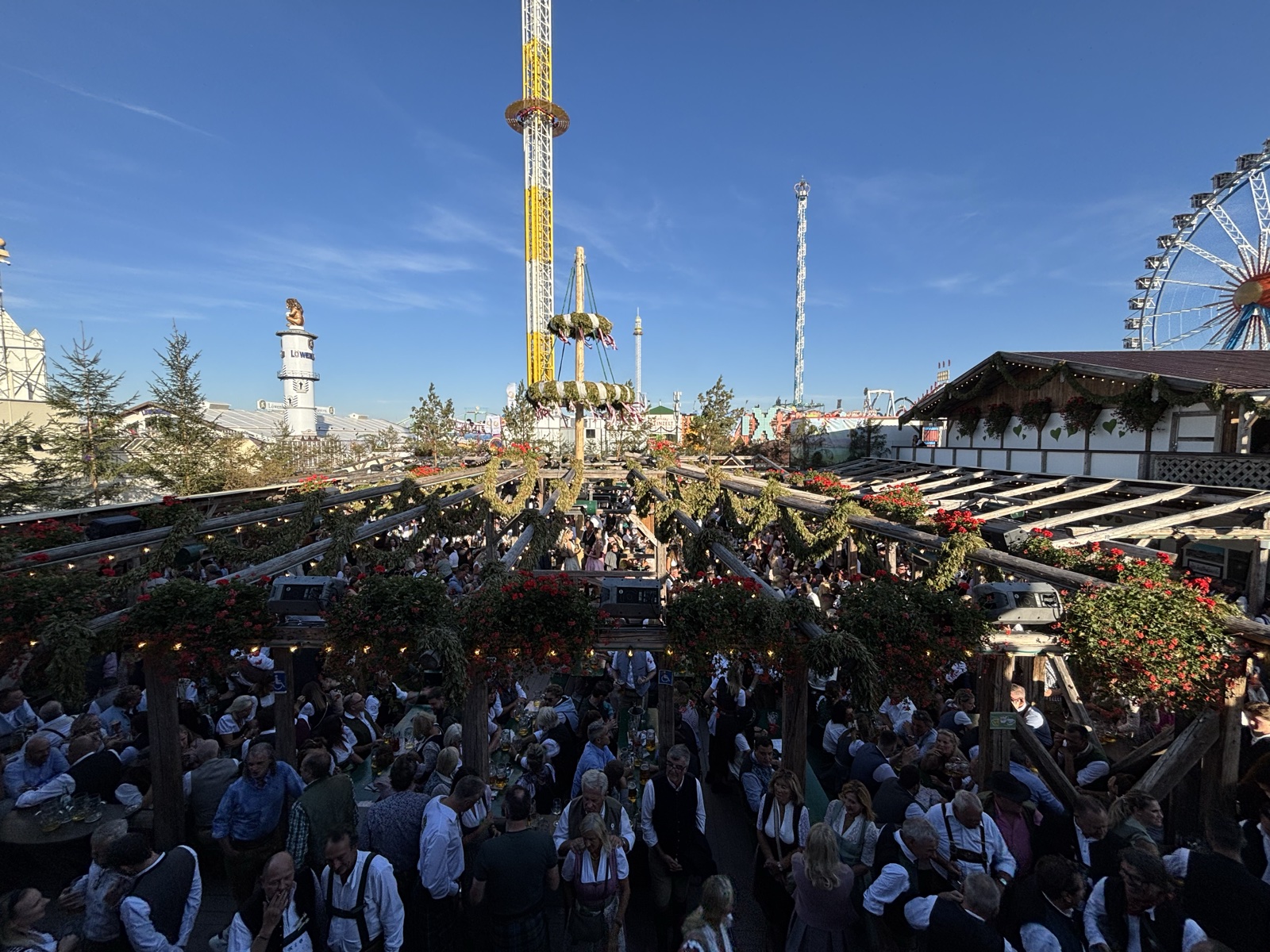
Tuesday afternoon, after the first two talks.
The four audiences this year could hardly have been more different: women building their careers at SAP and Amazon, observability engineers at a Grafana event, advertising agencies at a Wiesn pre-event, and a room of working mothers and fathers at a conference about combining career and family. I prepared four different talks. Somewhere between the second and the third, I realised I was answering the same question four times.
When an agent does the work, who makes the last decision?
Each room needed a different answer. Here is what I took away from each one, and from the people I shared the stage with.
Tuesday morning: your brand, your decision
Speak Up & Scale Up, SAP Business Women’s Network × Women@Amazon, AWS Munich office
The breakfast session had two halves. Verena Laumayer from SAP opened with public speaking: how to get on a stage and be heard. I followed with the “scale up” half: how AI can help you build a personal brand without turning it into a second job.
I learned a lot from Verena about public speaking. The idea I’m taking straight into my next talk is the deliberate pause. Not only an audio pause, where you simply stop talking, but a visual one too: put a blank screen up, and the room stops reading and looks back at you. Both are cheap ways to refocus an audience.
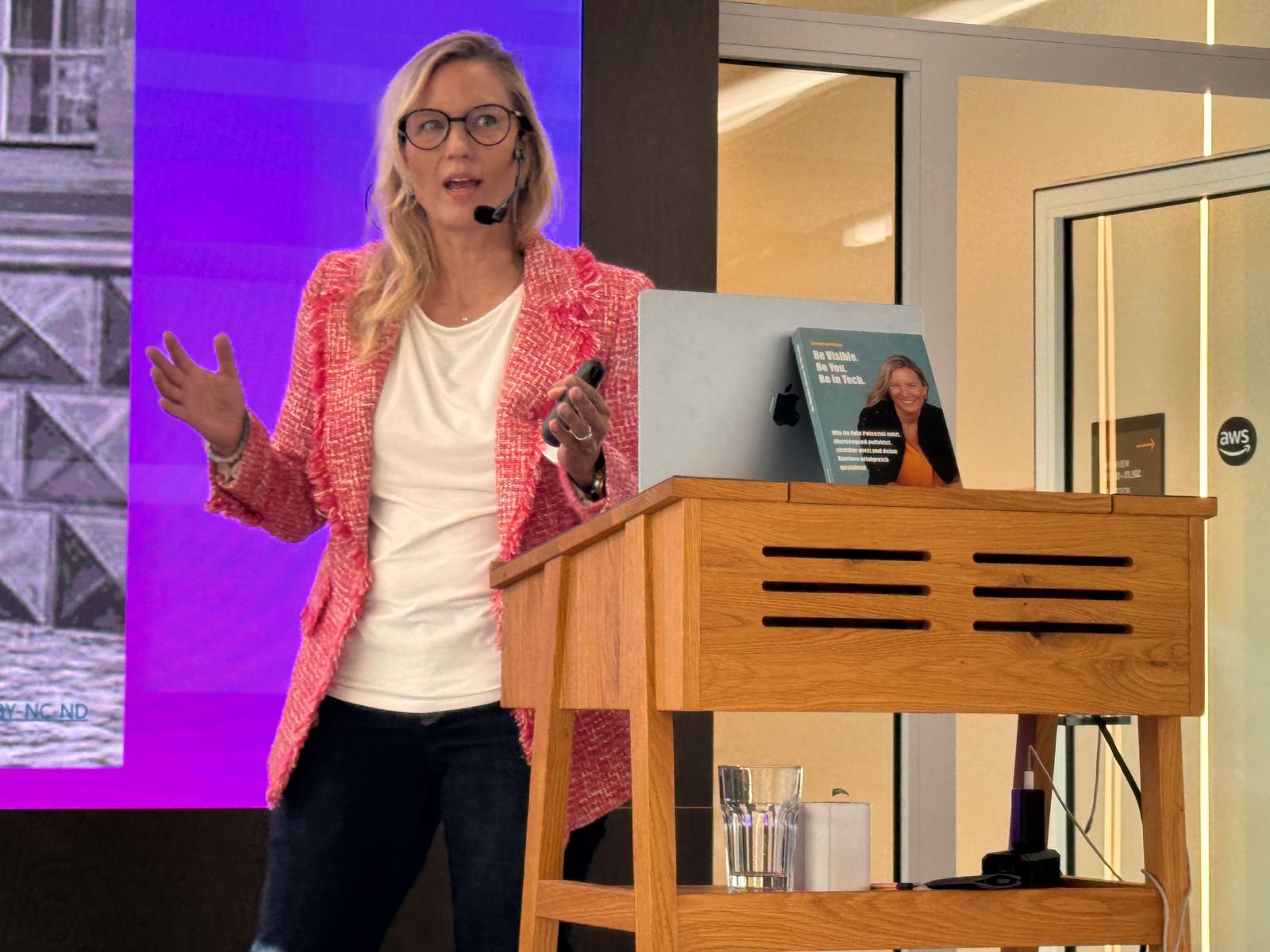
Verena Laumayer opening the session on public speaking.
My core point was that AI should be your sparring partner, not your ghostwriter. The most useful thing it can do is interview you. It asks the questions a good coach would ask, pushes back on generic answers (“passionate about innovation” describes everyone), and helps you sharpen what you want to be known for. I built the session around the Personal Brand Canvas I had published that morning [1].
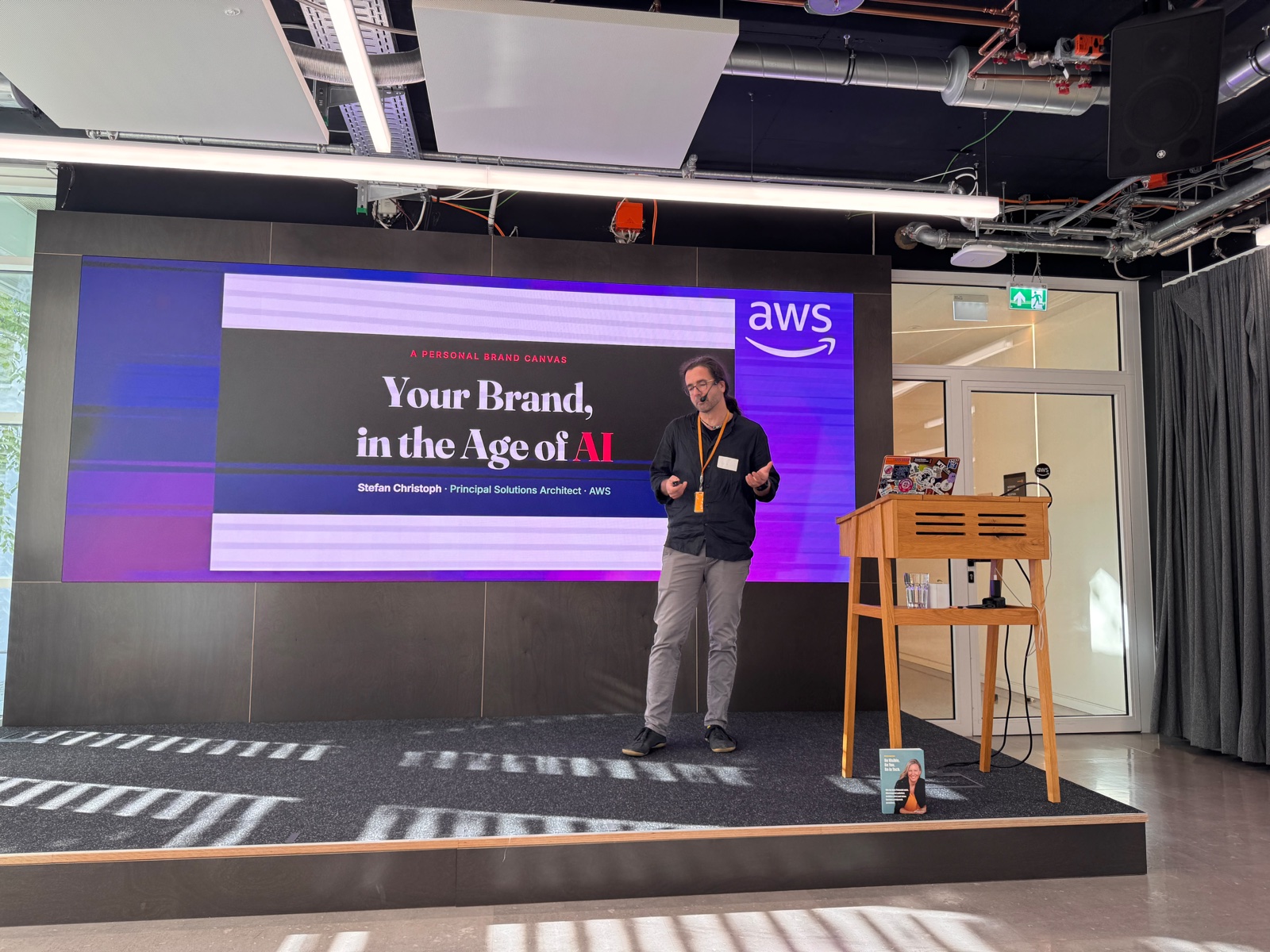
The "scale up" half: your brand, in the age of AI.
Christine Wedl, who organised the event as her first as Director for Women at Amazon, summarised it better than I could:
“Stefan took it further by showing how AI can accelerate the journey and sharing an AI assistant that acts as your personal interviewer.” [2]
Rosemary Ismalou from the SAP Business Women’s Network put the boundary in one sentence: “AI won’t build your brand for you, but it can help you uncover your strengths.” [3]
We got a lot of good questions. One was how I manage my day job alongside all the thought leadership and publishing. My answer was passion. That is the honest answer, and it felt good to hear it in my own voice.
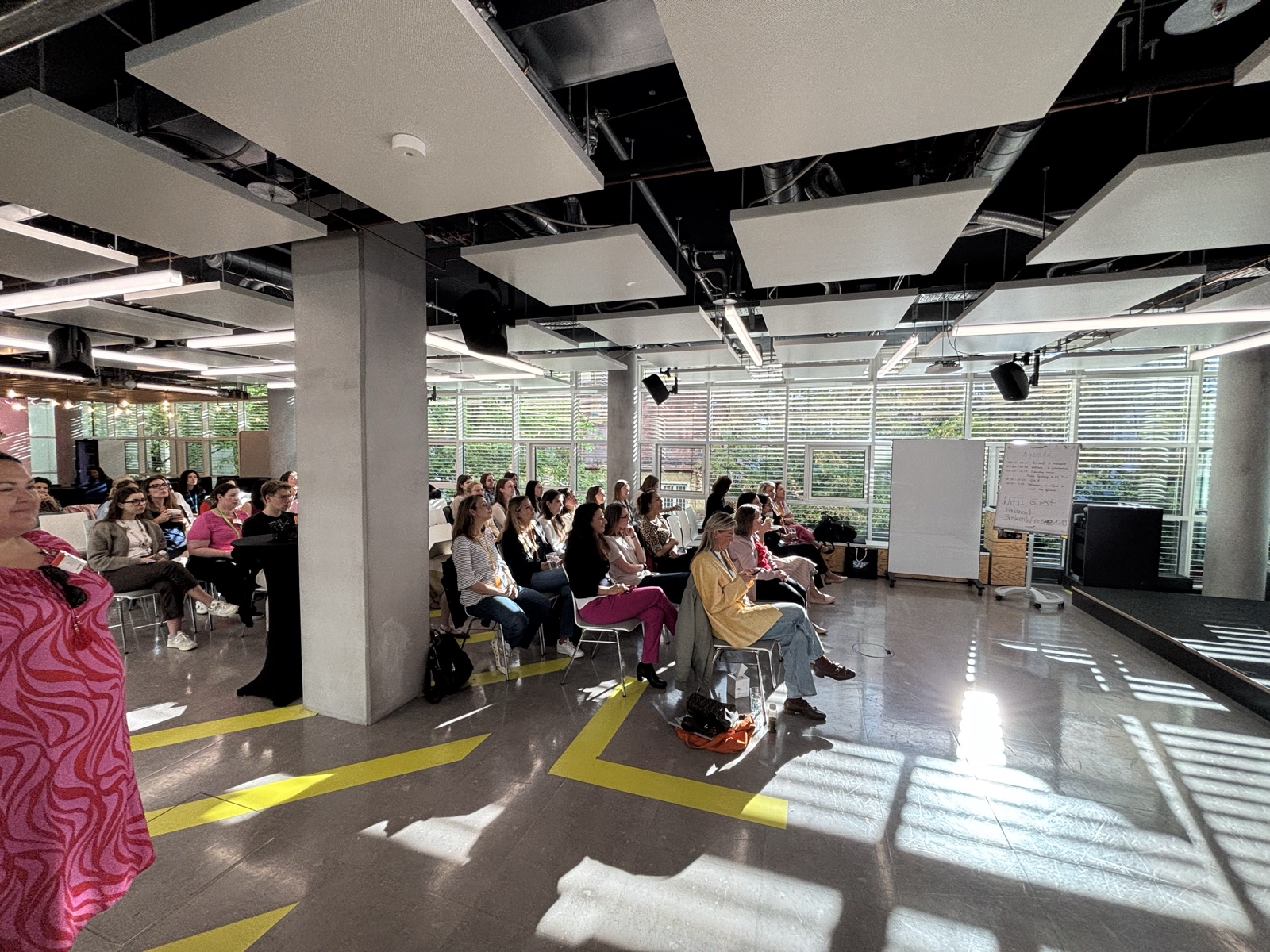
The room at the AWS Munich office.
Who clicks last: you, every time. The AI asks, drafts and suggests. You decide what you stand for. If you hand that decision over, you don’t have a brand. You have someone else’s average.
Tuesday afternoon: when no one clicks at all
Grafana Oktoberfest, smartvillage Schwanthalerhöhe
Three hours later I was in front of a very different crowd: engineers and architects who had spent the morning on OpenTelemetry and observability. My job was to zoom out. Observability matters, but on its own it gives you a very well-monitored prototype, not a production agent. Depending on the workload, production can also need identity, memory, tools, and increasingly, the ability to pay.
Payments are where the question gets interesting. An agent that calls a dozen paid APIs in one task can’t practically wait for a human to approve each payment. The click disappears. So the control has to move: from a confirmation at the moment of payment to rules you set before the agent starts.
That is how Amazon Bedrock AgentCore Payments is built. Every transaction runs inside a payment session with a spending cap and an expiry time, and the cap is checked outside the model. The AWS team put it plainly: “Prompt injection can’t lift the cap, because the cap is enforced outside the model.” [4] The underlying protocol, x402, uses HTTP’s long-unused 402 “Payment Required” status code, which I have written about before [5].
Who clicks last: nobody, at payment time. The human decision moves earlier, into budgets and policies, and later, into the audit trail. You give up the click, but you keep bounded control: a cap limits how much the agent can spend, not whether each purchase is the right one.
Thursday morning: onboard a colleague, not a program
The Dual Shift Conference, Mercedes-Benz Niederlassung München
Thursday started at The Dual Shift. Laura Giersberg gave the keynote on building your own AI agent to make full-time work and family life fit together, and I took over for a five-minute live demo.
Sharing the stage with Laura was an amazing experience, and it brought me into a community that was new to me. I met a lot of interesting women and loved the energy in the room.
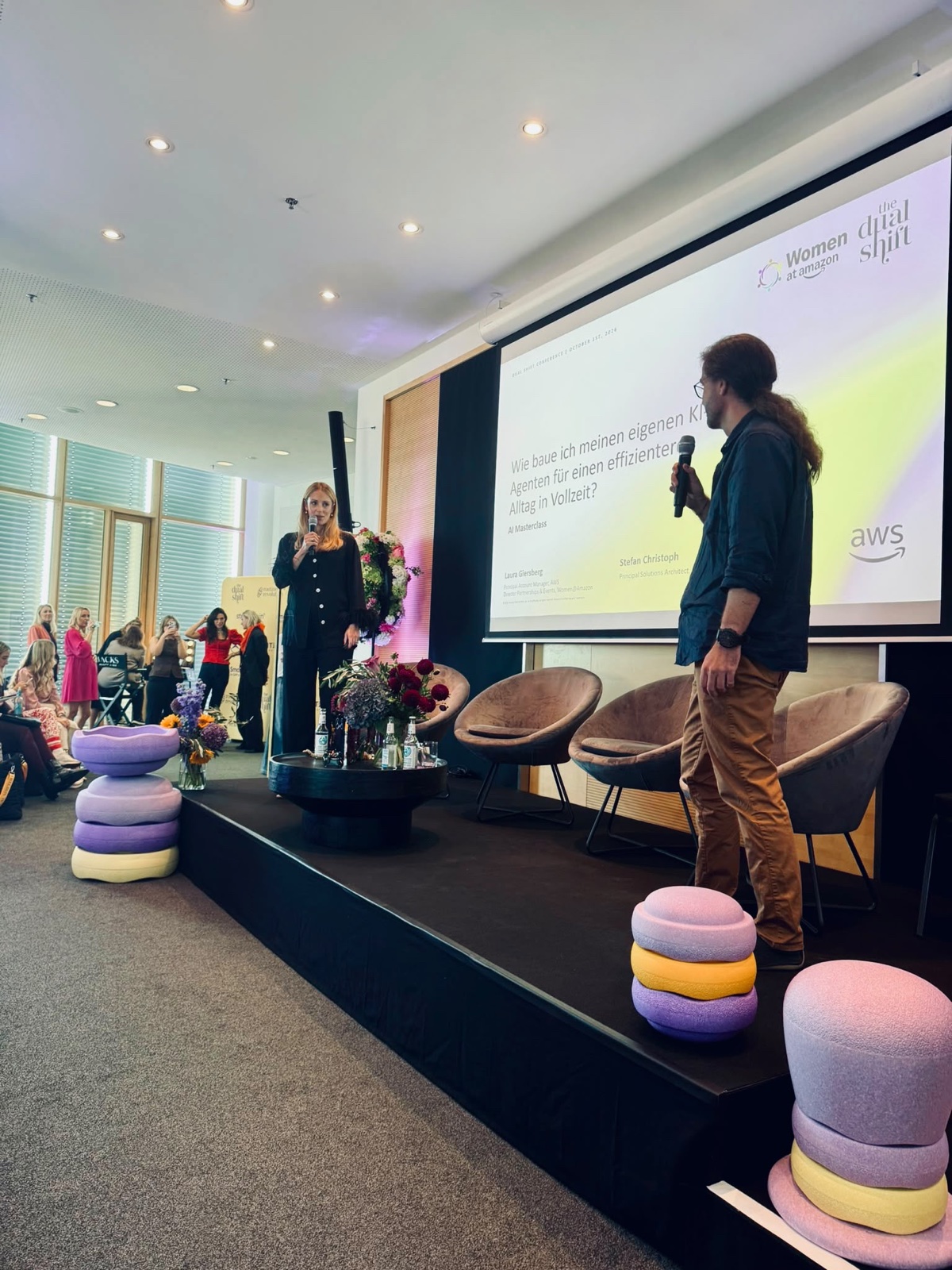
Dream team: Laura Giersberg and me on stage at The Dual Shift.
The audience was mostly not technical, and the topic was mental load, not productivity. So I avoided programming language altogether. Building an agent, I suggested, is like onboarding a new colleague. You answer four questions on their first day:
- Job: what is your task?
- Access: what are you allowed to see?
- Limits: what must you never do without me?
- Rhythm: when do you work?
These four questions are a checklist you can take to any AI tool, even though tools differ in how strictly they let you enforce the answers. That mattered because most of the audience doesn’t use the one I demonstrated.
The demo agent sorts the flood of messages from a school-parents group chat. While I was building it, it surprised me. It flagged a nut allergy against a snack offer and a schedule clash with a Tuesday sports class, and neither fact appeared in any of the messages. Both came from a separate document of family rules I had given it. Then it drafted replies on its own and added a line I had never asked for: “I won’t send this message. Only you decide.”
The agent only drafts; sending stays with you. The tool adds a second safeguard for scheduled runs: in Amazon Quick Flows, actions can either run without asking or wait for you to confirm each one, and the documentation recommends confirmation: “User confirmation is recommended to help avoid AI prediction errors.” [6]
Alina Wende, who attended, wrote afterwards that the day covered “KI und Female Health” alongside power, flexible full-time work and financial independence, and listed me among the speakers she had listened to “gebannt”, spellbound [7]. I’ll take that.
Who clicks last: you, deliberately. The agent drafts, you send.
Thursday afternoon: the last human click
Xingu Media Wiesn, Kustermann am Viktualienmarkt
Then a dash across town for the last talk, in German, to advertising agencies. Most of their clients don’t sell on Amazon, so this wasn’t a retail pitch. It was about what changes when the customer is an agent.
The slide I spent the most time on is called “The Last Human Click”. Shopping agents already compare and choose. As they start to complete purchases as well, that changes who a brand or an agency is trying to convince. If the last click in the journey belongs to an agent, the work moves to everything before it: the data the agent can read, the trust signals it weighs, the price and terms it can parse [8] [9].
I closed with two demos: a team of advertising agents planning a campaign in conversation, and a publisher charging AI crawlers per request at the edge instead of blocking them.
Manuel Siedler, Managing Director at Xingu, wrote the next day (my translation): “I thought it was a great mix of content and networking, and of course great food. That calls for a repeat next year.” [10]
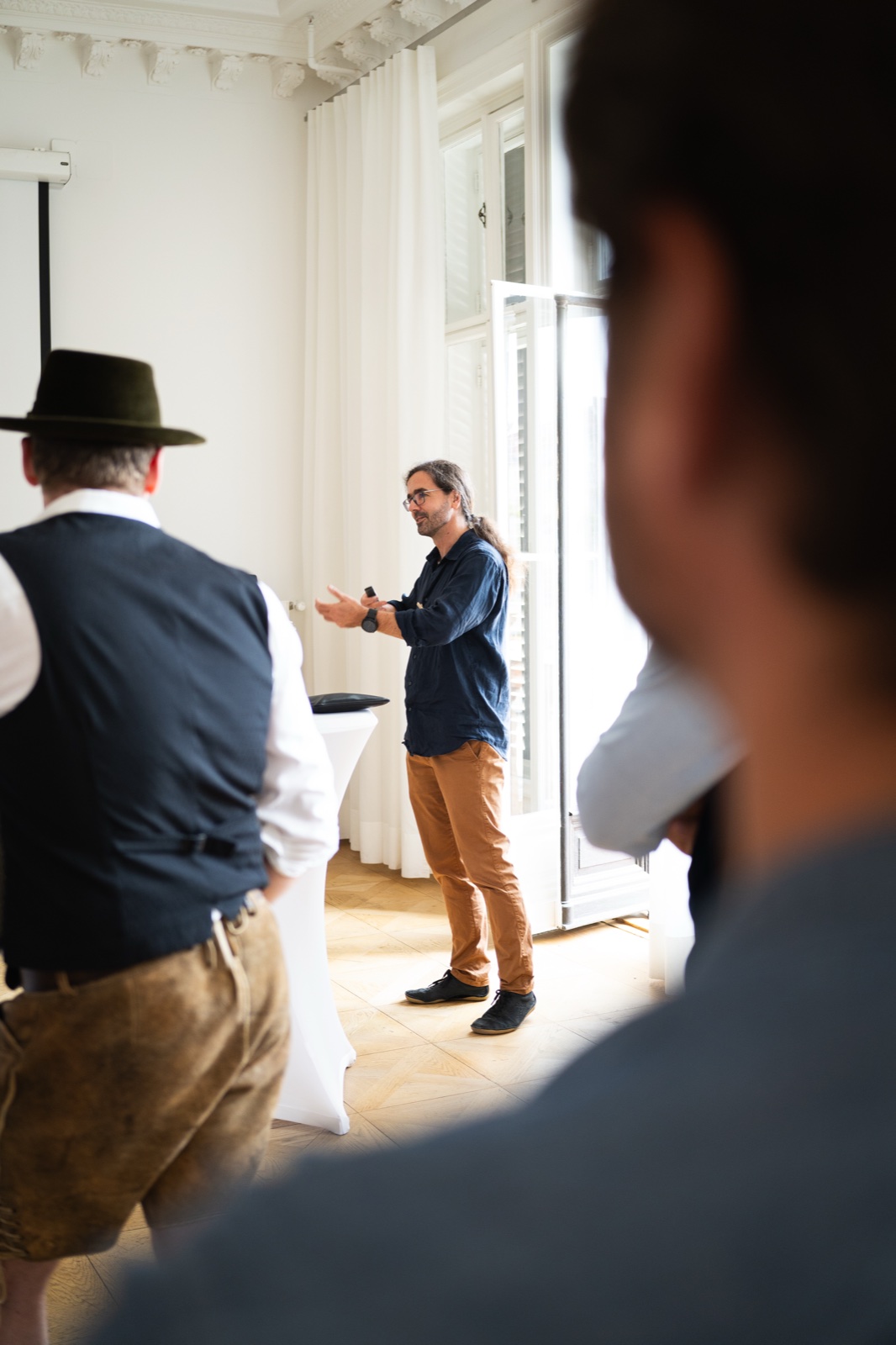
Talking AI agents to agencies at the Xingu Media Wiesn pre-event.
Who clicks last: eventually, the agent. Which means the humans who used to design for the final click now have to design for the agent that makes it.
The other asymmetry
Asymmetry has been a major theme for me lately; I’ve been writing a whole series of posts about it [11]. Two of this week’s four rooms were full of women in tech and at work, and reconnecting with that community made it visible to me once again what kind of asymmetry we still have there. The Dual Shift’s motto says it well: “Because we cannot be who we cannot see.”
The four rooms showed me a second asymmetry too. Different industries and different groups of people have very different levels of exposure to AI, and very different levels of adoption. It was good to see that difference up close, and you only get to see it if you leave your own bubble.
The question of who gets the last word isn’t only one we ask about agents.
Thank you
Four talks in three days only work because other people do the hard parts.
Thank you to Christine Wedl, Rosemary Ismalou, Cathy Bender, Tatiana Voytsenko, Nahia Orduña and Tonia Schneider and the whole organising team for the SAP × Women@Amazon breakfast, and to Verena Laumayer for a co-speaker slot that fit together so well. Her question to the room is one I’ll keep: what word comes to people’s minds when your name comes up and you’re not in the room?
Thank you to Jakob Cuber, Ellie Sion and the Grafana team for the slot and the Käfer tent.
To Maria von Scheel-Plessen for building The Dual Shift, and to Laura Giersberg for trusting me with the second half of her keynote. And to everyone who shared the Dual Shift morning programme with us: Alexandra May, Vera Steinhäuser, Teresa Conrad, Mateja Mögel, Elke Benning-Rohnke, Lea Lange, Lea Sophie Lex, Franzi von Hardenberg, Magdalena Oehl, Miriam Sternitzky, Dr. Antje Schulte-Mattler, Virginia Thrun, Livia von Mitschke-Collande, Birgit Amelung, Melli Zampanella, Fae Fazeli, Denise Haverkamp, Alicia Lindner, Dr. Anna Weber and Isabel Grupp-Kofler.
And to Stefan Kotous, Alexander Nelkenstock, Manuel Siedler and Wolfgang Kirschner for the first Xingu Media Wiesn, and to Kim Schlicht for sharing the stage.
And to everyone who wrote, commented or simply came up afterwards to talk: thank you. That is the part of these weeks I remember longest.
Which room would you have been in? And in your work, who makes the last click today?
Sources
- [1] Your Personal Brand, in the Age of AI — own post, 2026-09-29
- [2] Christine Wedl on LinkedIn, 2026-10-01
- [3] Rosemary Ismalou on LinkedIn, 2026-09-30
- [4] Enable safe agentic payments with built-in guardrails using Amazon Bedrock AgentCore payments — AWS Machine Learning Blog
- [5] HTTP 402: The 30-Year Placeholder That AI Agents Finally Activated — own post
- [6] Scheduling your Amazon Quick Flows — AWS documentation
- [7] Alina Wende on LinkedIn, 2026-10-02
- [8] Who Pays for the Agentic Web — the Agent or the Advertiser? — own post
- [9] Who Pays to Un-Bias Your Agent? — own post
- [10] Manuel Siedler on LinkedIn, 2026-10-02
- [11] The Iceberg Problem — own post, part 6 of the asymmetries series
About the Author
Stefan Christoph is a Principal Solutions Architect at AWS, focused on agentic AI, media & entertainment, and helping builders move from demo to production. He writes about AI architecture, developer productivity, and the future of software.
This is a personal blog. Opinions expressed here are my own and do not represent the views or positions of my employer.
❤️ Created with the support of AI (Kiro)