The Post-Agile Operating Model: How AI Changes How Teams Ship
The 7x Gap
Last month at the AI Engineer Summit, McKinsey presented findings from a survey of roughly 300 enterprises. The headline number was sobering: most organizations see only 5–15% productivity gains from AI coding tools. That’s it. After the licenses, the hackathons, the executive memos about “AI transformation.” A rounding error.
But buried in the same data was a different story. Top performers weren’t just doing slightly better. They were 7x more likely to have AI-native workflows spanning the entire development lifecycle, and 6x more likely to have restructured their teams around new roles. Their time to market improved 5–6x. One bank case study showed a 51% increase in code merges and a 60x increase in agent consumption after restructuring.
From Cloud-Native to AI-Native: What Actually Changes
The Fifteen-Year Echo
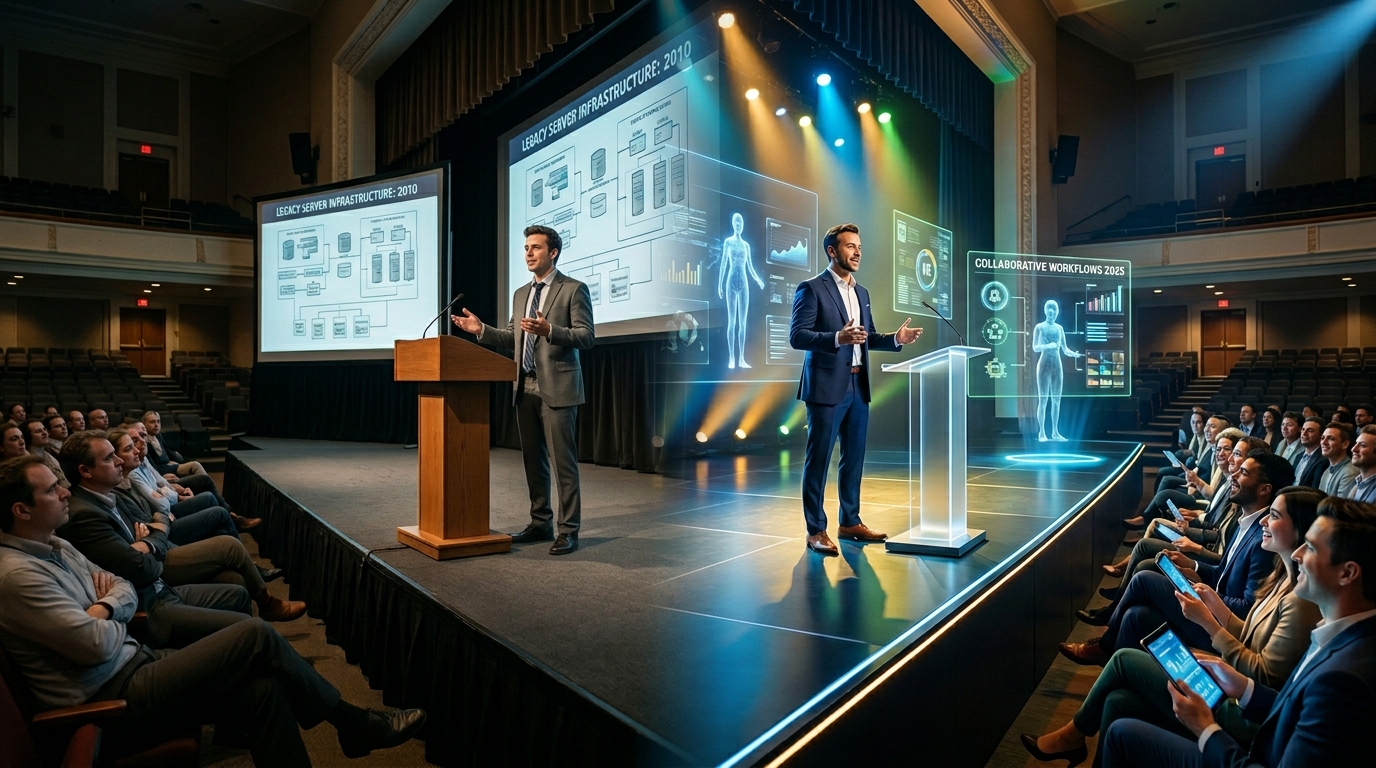
Fifteen years apart. Same stage. Different world.
In 2010, Adrian Cockcroft stood on the QCon stage and told the audience that Netflix was running its entire business on a public cloud. Most people in the room thought he was crazy.
Fifteen years later, Cockcroft was back at QCon, this time explaining how he manages swarms of autonomous AI agents that produce several days’ worth of code in fifteen minutes [1]. The audience reaction was different. Nobody called him crazy. They were taking notes.