Software Fundamentals Matter More Than Ever
The Talk That Confirmed What I’ve Been Seeing

The books haven’t changed. The principles haven’t changed. The context has.
Matt Pocock stood on stage at the AI Engineer Summit and said something that most of the audience needed to hear: the developers who succeed with AI coding agents aren’t the ones who delegate everything. They’re the ones who fall back on engineering fundamentals [1].
AI Coding Productivity: 10%, Not 10x
The Number Nobody Wants to Hear
A few weeks ago, I wrote about running my entire workday through an AI agent [1] — meetings, research, CRM, content creation. Eight hours of productive work, not a single line of code. The response was overwhelmingly positive. But one comment stuck with me: “If AI agents are this good, why isn’t my team shipping 10x more?”
The answer is now backed by data from multiple independent studies — and it’s not what the vendor pitches suggest.
On the Loop, Not In It — But Code Quality Still Matters
On the Loop, Not In It — But Code Quality Still Matters
Yesterday one of my AI agents wasted 15 minutes chasing a bug that didn’t exist. The function was called transformPayload() — but it didn’t transform anything. It validated. The agent built three layers of transformation logic on top of it before realizing the name was a lie. I’ve seen this pattern dozens of times now. And it’s exactly why I think Kief Morris’s latest piece gets the big picture right but undersells one critical detail.
Technology Evolution Doesn't Move in a Straight Line—It Spirals
Technology Evolution Doesn’t Move in a Straight Line—It Spirals
The Proud Ops Colleague
Years ago, an Ops colleague proudly showed me something new. ClusterSSH—cssh [1]. A tool that opens multiple terminals to multiple machines—at the same time. You type once, it executes everywhere.
Back then, machines still had names. Ops folks knew their history, their specs, their quirks. They could tell you which server had been acting up last Thursday and what firmware it was running. And cssh? It let them follow the runbook consistently across every node. No more SSH-ing into machines one by one, hoping you didn’t forget a step on node 7.
🔧 𝗧𝗵𝗲 𝗠𝗮𝗶𝗻𝘁𝗲𝗻𝗮𝗻𝗰𝗲 𝗧𝗿𝗮𝗽: 𝗪𝗵𝘆 𝗬𝗼𝘂𝗿 𝗜𝗧 𝗦𝘆𝘀𝘁𝗲𝗺𝘀 𝗔𝗿𝗲 𝗠𝗼𝗿𝗲 𝗟𝗶𝗸𝗲 𝗣𝗹𝗮𝗻𝘁𝘀 𝗧𝗵𝗮𝗻 𝗦𝘁𝗼𝗻𝗲𝘀
🔧 𝗧𝗵𝗲 𝗠𝗮𝗶𝗻𝘁𝗲𝗻𝗮𝗻𝗰𝗲 𝗧𝗿𝗮𝗽: 𝗪𝗵𝘆 𝗬𝗼𝘂𝗿 𝗜𝗧 𝗦𝘆𝘀𝘁𝗲𝗺𝘀 𝗔𝗿𝗲 𝗠𝗼𝗿𝗲 𝗟𝗶𝗸𝗲 𝗣𝗹𝗮𝗻𝘁𝘀 𝗧𝗵𝗮𝗻 𝗦𝘁𝗼𝗻𝗲𝘀
After years of watching organizations struggle with outdated systems, I’ve written about a pattern we all know too well—the maintenance trap in IT.
Here’s the uncomfortable truth: We’ve all seen those systems that haven’t been updated in years. Aging interfaces, accumulating bugs, mounting security risks. We assess the cost of updates, weigh the business value, and often decide to “just skip this one.”
IT System Maintenance in the age of AI
IT System Maintenance in the age of AI
Introduction - The Maintenance Trap in IT
You don’t need to be in the IT industry for long to have witnessed this firsthand. Even non-IT users do. Those systems that haven’t been maintained for ages. From a user perspective, you “just” see a maybe aged user interface, non-evolving features, and old bugs or quirks become accepted by, possibly generations of, users. From a user perspective, you should have an eye on this. Often, this not only means that the system becomes cumbersome to use, but it also means that there are possibly no security updates being made. We will see just in a bit that it might even not be possible anymore. So think about which kind of data you want to put in there.
Passing on control to your AI coding agent team entirely?
Passing on control to your AI coding agent team entirely?
Anthropic researcher Nicholas Carlini conducted a stress test of their Claude Opus 4.6 model by deploying 16 parallel AI agents to build a complete C compiler in Rust from scratch(https://lnkd.in/eGMp4b2K). Over approximately two weeks and nearly 2,000 Claude Code sessions, the agents autonomously produced a 100,000-line compiler capable of compiling the Linux 6.9 kernel across multiple architectures (x86, ARM, and RISC-V). The experiment cost around $20,000 in API fees and demonstrated that coordinated AI agent teams can tackle complex systems programming challenges traditionally requiring significant human expertise and architectural oversight.
Kiro Subagents: Scaling Development with Specialized AI Agents
Kiro Subagents: Scaling Development with Specialized AI Agents
When you’re building complex software, context management becomes your bottleneck. Your AI agent is juggling frontend components, backend APIs, database schemas, testing frameworks, and documentation—all competing for limited context window space. The result? Diluted focus and suboptimal outputs.
Kiro Subagents solve this architectural challenge by enabling parallel task execution through specialized, autonomous agents that maintain independent context windows.
🏗️ The Architecture: Parallel Contexts, Focused Execution
Subagents operate as independent processes with their own context management. This architectural pattern delivers several technical advantages:
🎯 From Chaos to Control: Building Predictable AI Agents That Get Smarter Over Time
🎯 From Chaos to Control: Building Predictable AI Agents That Get Smarter Over Time
⚖️ We need to balance Agency versus Control. We want AI systems to be super easy to use, read our minds, and just provide the answer we need. But we also need to make sure that nothing goes wrong. The more we control, the less agency we get. This is a balancing act.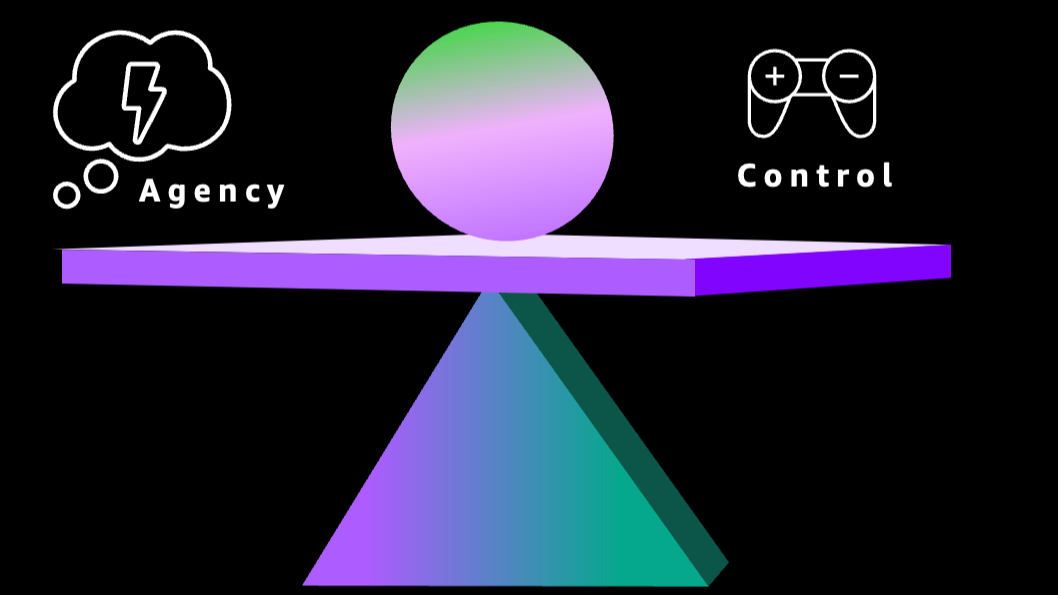
Let’s focus on the control part. There are many different mechanisms to increase and guarantee control. Things like policies and guardrails come to mind. Those are obvious and powerful. I will cover them in a dedicated post.
🎯 From Chaos to Control: Building Predictable AI Agents That Get Smarter Over Time
🎯 From Chaos to Control: Building Predictable AI Agents That Get Smarter Over Time
Agentic systems are incredibly flexible, but ad-hoc code generation means unpredictable results and wasted resources. How do we fix this without losing the magic? The answer lies in tools—prebuilt, tested, reusable components that make your AI agents more capable, reliable, and cost-efficient with every interaction.
With the right approach, your agents can become smarter and more efficient over time. Dive deep in the article below.