Technology Evolution Doesn't Move in a Straight Line—It Spirals
Technology Evolution Doesn’t Move in a Straight Line—It Spirals
The Proud Ops Colleague
Years ago, an Ops colleague proudly showed me something new. ClusterSSH—cssh [1]. A tool that opens multiple terminals to multiple machines—at the same time. You type once, it executes everywhere.
Back then, machines still had names. Ops folks knew their history, their specs, their quirks. They could tell you which server had been acting up last Thursday and what firmware it was running. And cssh? It let them follow the runbook consistently across every node. No more SSH-ing into machines one by one, hoping you didn’t forget a step on node 7.
𝗙𝗿𝗼𝗺 𝗖𝗮𝗹𝗹 𝗖𝗲𝗻𝘁𝗲𝗿 𝘁𝗼 𝗔𝗜 𝗔𝗴𝗲𝗻𝘁 𝗛𝘂𝗯: 𝗧𝗵𝗲 𝗙𝘂𝘁𝘂𝗿𝗲 𝗼𝗳 𝗖𝘂𝘀𝘁𝗼𝗺𝗲𝗿 𝗦𝘂𝗽𝗽𝗼𝗿𝘁 𝗜𝘀 𝗛𝗲𝗿𝗲
𝗙𝗿𝗼𝗺 𝗖𝗮𝗹𝗹 𝗖𝗲𝗻𝘁𝗲𝗿 𝘁𝗼 𝗔𝗜 𝗔𝗴𝗲𝗻𝘁 𝗛𝘂𝗯: 𝗧𝗵𝗲 𝗙𝘂𝘁𝘂𝗿𝗲 𝗼𝗳 𝗖𝘂𝘀𝘁𝗼𝗺𝗲𝗿 𝗦𝘂𝗽𝗽𝗼𝗿𝘁 𝗜𝘀 𝗛𝗲𝗿𝗲
Just returning from an internal Amazon Connect deep[1] dive. I haven’t touched this particular product since maybe 5 years?! Dirk Fröhner — I’m sure you remember our joint large-scale workshop with one of your customers.
What stuck with me from that time was how fast you can actually set up a contact center in the cloud — less than 30 minutes from zero to the first call received — and how much AI was already improving both the customer and agent experience back then. That hasn’t changed.
From my perspective balancing AI Agents Agency with Control is one of the most important themes for
From my perspective balancing AI Agents Agency with Control is one of the most important themes for 2026. We need to get this right both as builders and users for AI Agentic systems.
Anthropic’s study “Measuring AI agent autonomy in practice”[1] nicely fits into this as the started to study autonomy of ai agents based of usage of Claude Code and tool invocations. Already this first iteration provides some nice insights. Obviously a high focus on Coding use cases, but also indicating a wide variety of other use cases which resonate with my experience from customers I’m working with.
𝗠𝗖𝗣 𝗧𝗼𝗼𝗹 𝗖𝗵𝗮𝗼𝘀 - 𝗴𝗼𝘁 𝗹𝗼𝘀𝘁 𝗶𝗻 𝗮𝘂𝘁𝗵𝗲𝗻𝘁𝗶𝗰𝗮𝘁𝗶𝗼𝗻 𝗮𝗻𝗱 𝗴𝗼𝘃𝗲𝗿𝗻𝗮𝗻𝗰𝗲?!
𝗠𝗖𝗣 𝗧𝗼𝗼𝗹 𝗖𝗵𝗮𝗼𝘀 - 𝗴𝗼𝘁 𝗹𝗼𝘀𝘁 𝗶𝗻 𝗮𝘂𝘁𝗵𝗲𝗻𝘁𝗶𝗰𝗮𝘁𝗶𝗼𝗻 𝗮𝗻𝗱 𝗴𝗼𝘃𝗲𝗿𝗻𝗮𝗻𝗰𝗲?!
Agentic coding has become reality for developers everywhere 🚀. Tools like Anthropic’s Claude Code and Amazon’s Kiro are leading the charge, boosting coding efficiency and developer experience—as long as you stay firmly in the driver’s seat. But with great power comes challenges, especially as agentic workflows drive more tool integrations via the Model Context Protocol (MCP). Developers and teams now juggle multiple MCP servers, each with its own endpoints, authentication flows, and security requirements. This raises key issues: How do we guarantee security and compliance at scale, whether for solo devs or enterprise teams? And from a pure DX perspective, who wants to wrangle endless auth methods? 😩
🎯 'How do we pick the RIGHT AI agent use case?
🎯 “How do we pick the RIGHT AI agent use case?
This is the question I hear most from customers exploring agentic AI.
Here’s the mechanism I run through together with the customer:
The 4-Quadrant Evaluation
When a customer brings me 5-10 agent ideas, we structure each one across four dimensions:
📊 Business Value & Strategic Fit → What pain does it solve? For whom? How often? → Can we quantify the impact? (Revenue, cost, time, quality) → Which KPI moves if this works for 6 months?
Passing on control to your AI coding agent team entirely?
Passing on control to your AI coding agent team entirely?
Anthropic researcher Nicholas Carlini conducted a stress test of their Claude Opus 4.6 model by deploying 16 parallel AI agents to build a complete C compiler in Rust from scratch(https://lnkd.in/eGMp4b2K). Over approximately two weeks and nearly 2,000 Claude Code sessions, the agents autonomously produced a 100,000-line compiler capable of compiling the Linux 6.9 kernel across multiple architectures (x86, ARM, and RISC-V). The experiment cost around $20,000 in API fees and demonstrated that coordinated AI agent teams can tackle complex systems programming challenges traditionally requiring significant human expertise and architectural oversight.
AI coding has quickly developed from an interesting research project to an important tool in the bel
AI coding has quickly developed from an interesting research project to an important tool in the belt of every software developer. Tools like #kiro allow to define subagents, which take on specific responsibilities within the software project and speed up development and improve quality. Nice way to navigate overcrowded context windows.
But where to start? How to identify subagents which can improve the team and subsequently - how to come up with a first version of those agents?
Kiro Subagents: Scaling Development with Specialized AI Agents
Kiro Subagents: Scaling Development with Specialized AI Agents
When you’re building complex software, context management becomes your bottleneck. Your AI agent is juggling frontend components, backend APIs, database schemas, testing frameworks, and documentation—all competing for limited context window space. The result? Diluted focus and suboptimal outputs.
Kiro Subagents solve this architectural challenge by enabling parallel task execution through specialized, autonomous agents that maintain independent context windows.
🏗️ The Architecture: Parallel Contexts, Focused Execution
Subagents operate as independent processes with their own context management. This architectural pattern delivers several technical advantages:
🚀 Caught up on AWS’s open-sourcing of API models in Smithy format (slipped my radar earlier this yea
🚀 Caught up on AWS’s open-sourcing of API models in Smithy format (slipped my radar earlier this year, but timeless value!). There is a GitHub Repository [4] available with AWS API smithy models for 200+ services. Announcement Blog: [1]
A Smithy model is the core semantic representation in Smithy, an open-source interface definition language (IDL) developed by AWS for defining APIs, services, and data structures in a protocol-agnostic way.
It consists of shapes (like primitives, lists, maps, structures, and services), traits for metadata, and shape IDs for referencing components, enabling code generation for SDKs, documentation, and validation across languages. Models are serialized in formats like Smithy IDL or JSON and include a prelude with built-in types.
🎯 From Chaos to Control: Building Predictable AI Agents That Get Smarter Over Time
🎯 From Chaos to Control: Building Predictable AI Agents That Get Smarter Over Time
⚖️ We need to balance Agency versus Control. We want AI systems to be super easy to use, read our minds, and just provide the answer we need. But we also need to make sure that nothing goes wrong. The more we control, the less agency we get. This is a balancing act.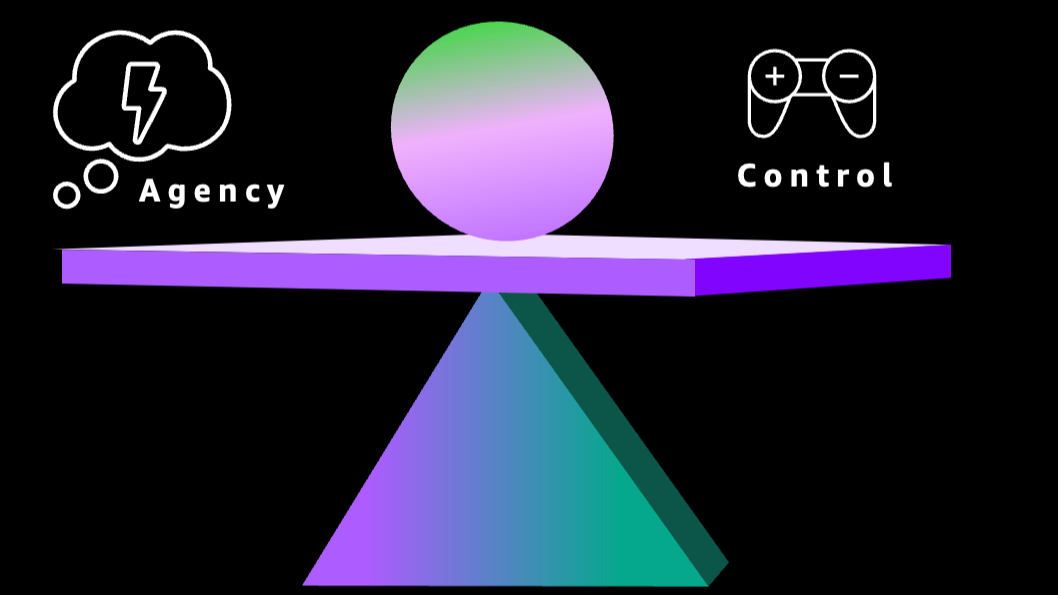
Let’s focus on the control part. There are many different mechanisms to increase and guarantee control. Things like policies and guardrails come to mind. Those are obvious and powerful. I will cover them in a dedicated post.