🎯 'How do we pick the RIGHT AI agent use case?
🎯 “How do we pick the RIGHT AI agent use case?
This is the question I hear most from customers exploring agentic AI.
Here’s the mechanism I run through together with the customer:
The 4-Quadrant Evaluation
When a customer brings me 5-10 agent ideas, we structure each one across four dimensions:
📊 Business Value & Strategic Fit → What pain does it solve? For whom? How often? → Can we quantify the impact? (Revenue, cost, time, quality) → Which KPI moves if this works for 6 months?
Passing on control to your AI coding agent team entirely?
Passing on control to your AI coding agent team entirely?
Anthropic researcher Nicholas Carlini conducted a stress test of their Claude Opus 4.6 model by deploying 16 parallel AI agents to build a complete C compiler in Rust from scratch(https://lnkd.in/eGMp4b2K). Over approximately two weeks and nearly 2,000 Claude Code sessions, the agents autonomously produced a 100,000-line compiler capable of compiling the Linux 6.9 kernel across multiple architectures (x86, ARM, and RISC-V). The experiment cost around $20,000 in API fees and demonstrated that coordinated AI agent teams can tackle complex systems programming challenges traditionally requiring significant human expertise and architectural oversight.
AI coding has quickly developed from an interesting research project to an important tool in the bel
AI coding has quickly developed from an interesting research project to an important tool in the belt of every software developer. Tools like #kiro allow to define subagents, which take on specific responsibilities within the software project and speed up development and improve quality. Nice way to navigate overcrowded context windows.
But where to start? How to identify subagents which can improve the team and subsequently - how to come up with a first version of those agents?
Kiro Subagents: Scaling Development with Specialized AI Agents
Kiro Subagents: Scaling Development with Specialized AI Agents
When you’re building complex software, context management becomes your bottleneck. Your AI agent is juggling frontend components, backend APIs, database schemas, testing frameworks, and documentation—all competing for limited context window space. The result? Diluted focus and suboptimal outputs.
Kiro Subagents solve this architectural challenge by enabling parallel task execution through specialized, autonomous agents that maintain independent context windows.
🏗️ The Architecture: Parallel Contexts, Focused Execution
Subagents operate as independent processes with their own context management. This architectural pattern delivers several technical advantages:
🚀 Caught up on AWS’s open-sourcing of API models in Smithy format (slipped my radar earlier this yea
🚀 Caught up on AWS’s open-sourcing of API models in Smithy format (slipped my radar earlier this year, but timeless value!). There is a GitHub Repository [4] available with AWS API smithy models for 200+ services. Announcement Blog: [1]
A Smithy model is the core semantic representation in Smithy, an open-source interface definition language (IDL) developed by AWS for defining APIs, services, and data structures in a protocol-agnostic way.
It consists of shapes (like primitives, lists, maps, structures, and services), traits for metadata, and shape IDs for referencing components, enabling code generation for SDKs, documentation, and validation across languages. Models are serialized in formats like Smithy IDL or JSON and include a prelude with built-in types.
Always takes a customer - my first time in our brand new BER21 in Berlin. Amazing location and Berli
Always takes a customer - my first time in our brand new BER21 in Berlin. Amazing location and Berlin is welcoming us with crispy & bright sunshine.
Always great to (re-) connect with colleagues. Bumping into Sascha to hear the latest about Containers at AWS, strategizing with Kerstin & Alexander and turning the last knobs with John on our presentation for this afternoon.
Wouldn’t be Berlin without the Bear obviously ….
The tl;dr is that 𝐩𝐫𝐨𝐦𝐨𝐭𝐢𝐨𝐧 and 𝐠𝐫𝐨𝐰𝐭𝐡 are two different things. - straight to the point. Growth is
The tl;dr is that 𝐩𝐫𝐨𝐦𝐨𝐭𝐢𝐨𝐧 and 𝐠𝐫𝐨𝐰𝐭𝐡 are two different things." - straight to the point. Growth is something which is owned by individuals - you own your own career (aka growth) and must be supported by your manager/company.
What often is missing is recognition and incentive to grow within a level without the necessary target of a future promotion. This creates then a promotion culture in which individual and managers alike are incentivized to promotion as 1st class citizen. Growth should be 1st class citizen while promotion is a possible effect.
🎯 From Chaos to Control: Building Predictable AI Agents That Get Smarter Over Time
🎯 From Chaos to Control: Building Predictable AI Agents That Get Smarter Over Time
⚖️ We need to balance Agency versus Control. We want AI systems to be super easy to use, read our minds, and just provide the answer we need. But we also need to make sure that nothing goes wrong. The more we control, the less agency we get. This is a balancing act.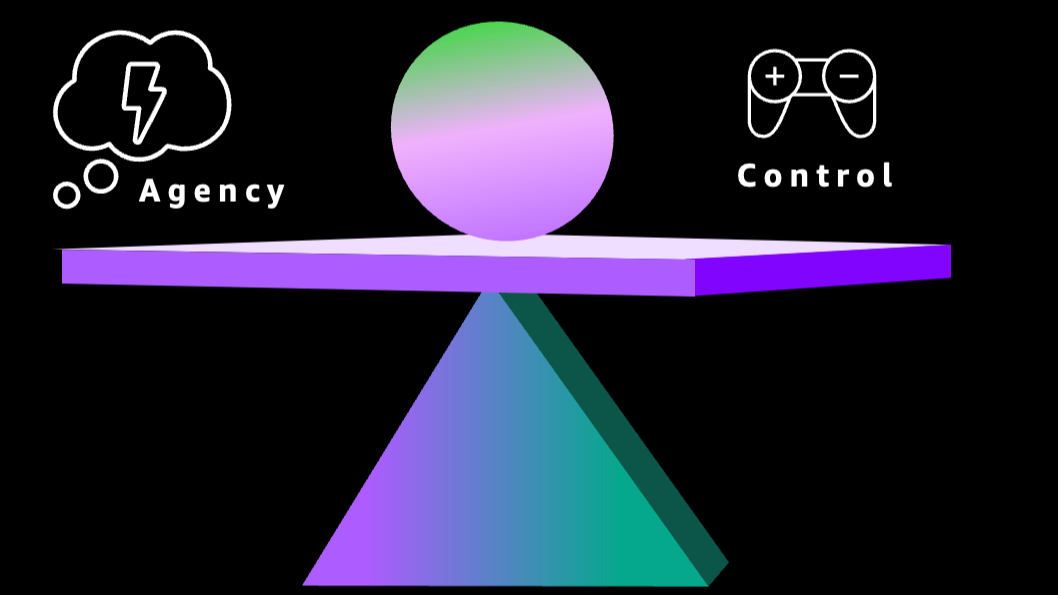
Let’s focus on the control part. There are many different mechanisms to increase and guarantee control. Things like policies and guardrails come to mind. Those are obvious and powerful. I will cover them in a dedicated post.
🎯 From Chaos to Control: Building Predictable AI Agents That Get Smarter Over Time
🎯 From Chaos to Control: Building Predictable AI Agents That Get Smarter Over Time
Agentic systems are incredibly flexible, but ad-hoc code generation means unpredictable results and wasted resources. How do we fix this without losing the magic? The answer lies in tools—prebuilt, tested, reusable components that make your AI agents more capable, reliable, and cost-efficient with every interaction.
With the right approach, your agents can become smarter and more efficient over time. Dive deep in the article below.
“By design, the innovation funnel leads to survival of the safest ideas.”
“By design, the innovation funnel leads to survival of the safest ideas.”
Yes been there and seen that. Not only in Germany where we are unfortunate very famous for that 😉.
Two thoughts on that:
-
Spending more time in ideation and evaluation can make a huge different. Mechanisms like Amazon’s working backwards can bring a lot of understanding already in those early phases of the funnel. Managing risks. Tom, +1 on the power of diverse teams!